People are quickly turning to artificial intelligence for health information, whether they need help understanding symptoms and medications or want to talk about their emotional problems. Because chatbots provide an easy-to-use, seemingly nonjudgmental environment, many are willing to ask questions they might not feel comfortable raising with a person. However, as AI becomes more advanced, worries are growing about overdependence, the risk of incorrect advice, and the danger of treating technology as a replacement for professional care.
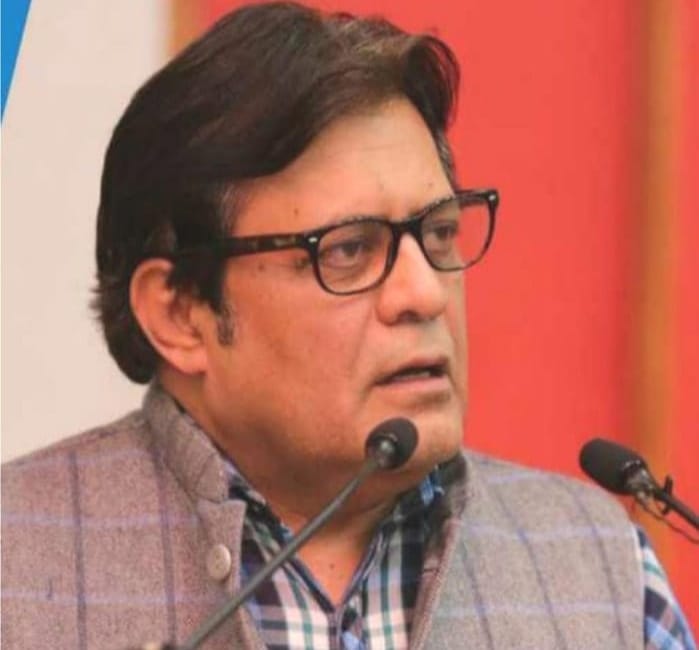
In the interview, Dr Jitendra Nagpal, Senior Psychiatrist and Director, Institute of Mental Health Services and Life Skills Promotion, Moolchand Medicity, New Delhi, discusses the opportunities and limitations of using AI to provide mental-health support. He states that AI can act as a first point of contact, help people express their feelings, and guide them toward the appropriate kind of support. On the other hand, he cautions against using algorithms to make diagnoses, assign labels, or replace the human relationship at the heart of therapy.
Dr. Nagpal emphasizes that empathy, an understanding of emotions, and non-verbal communication should remain central to effective mental-health care. He also examines AI's impact on children and warns that exposure should be balanced with the development of key human abilities such as thinking, communicating, and forming relationships. His view is rooted not in fear but in responsibility: even though AI can aid in mental-health care, it must not replace human interaction or professional assistance from a qualified individual.
Q: AI is increasingly becoming the first place people turn to for health information, including mental health. How do you see its role?
Dr Nagpal: AI is useful as a first-aid measure and works well as a gatekeeper for mental health; it can offer an immediate answer in crisis intervention and help people form opinions. For example, if you state your feelings—such as saying, 'I've been going through these feelings for the past two or three weeks, could you help me to understand what I'm experiencing?'—AI is good at spotting that this may not be just one problem, since you might be suffering from sadness, a feeling of helplessness, anxiety, or obsessive symptoms.
Q: But can AI actually diagnose a mental-health condition?
Dr Nagpal: You cannot assign a label until you understand the individual; for me, understanding the person and the nature of the difficulties they face matters more than making a diagnosis. We are in fact more troubled by the phobia associated with a diagnosis and by the stigma attached to it than by the actual symptoms, which are generally very recoverable.”
Q: What does a human therapist bring that AI cannot?
Dr Nagpal: The concept of spontaneity — including the emotional expressions between the mentee and the mentor, the therapist and the doctor, eye-to-eye contact, and the facial expressions showing distress, demeanour, joy and happiness — has to be shared when the patient's problems are apparent on their face, since AI is not capable of doing so.
I try to understand the non-verbal expressions that occur when you are sitting across the table from someone. The way we can empathise with one another, and the way the empathy from the therapist reaches the client in terms of them feeling the pain in the individual's heart—those interpersonal relationships and that interpersonal alliance are missing.'
Q: So can AI become a substitute for a mental-health professional?
Dr Nagpal: We cannot depend on AI to serve as a counselling advisor or a doctor in the field of mental health, because even though the responses can be very well organised mathematically and algorithmically, the emotional element as well as the practical aspects, the ability to form a connection, and compassion will all be entirely ignored.
Algorithms can be very damaging because they often give superficial answers and fail to build an emotional bond with the person seeking help. Even though AI can offer opinions like an agony aunt or an ordinary person, it should not be relied on to provide lasting, therapeutic mental-health solutions that can help an individual's well-being evolve and transform.
Q: Then where does AI fit into mental-health care?
Dr Nagpal: It can be useful as a first-aid measure and can serve as a gatekeeper in mental health. But if you are dealing with a person's personality as something that is developing, changing, and interacting with the other people around them, for example, with members of the family, you should not depend on AI for permanent healing; rather, true healing is obtained through one-on-one conversations between the therapist and the individual who needs help.
What is the greater danger in becoming too dependent on AI?
Dr Nagpal: "AI is a wonderful tool. We should use it as a supportive, facilitative tool that helps build responsibility and empowerment. Yet I think that responsibility should come before empowerment in the case of AI."
We don't want one-on-one human interaction to be replaced by an algorithm, since reliance on AI will destroy personal, face-to-face connection, emotional empathy, and interpersonal relationships, and instead promote the mistaken belief that only algorithms can save people's lives in cases of depression and anxiety.